Let the wheels do the transfer
Roll-on/roll-off, usually shortened to ro-ro, describes a handling method. Cargo travels aboard and ashore on wheels through a ramp. Cars and trucks may move under their own power. Unaccompanied trailers and cargo on specialized wheeled platforms may be moved by terminal tractors or other equipment.
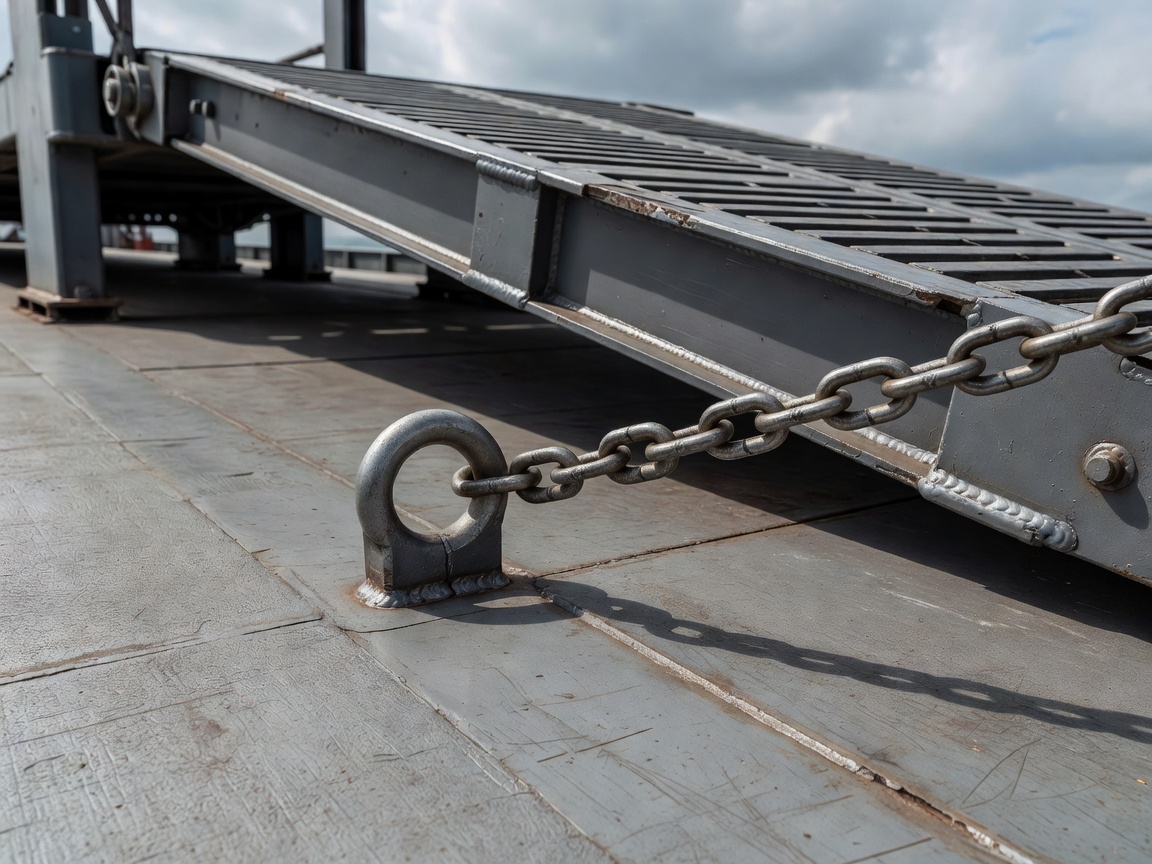
The ramp is only the first constraint. Its allowable loads, slope and clearances must suit the cargo and the berth arrangement. Inside the ship, deck heights, turning space and local deck strength determine where the load can go. Once parked, the cargo needs an appropriate securing arrangement for the voyage; wheels are useful for movement but do not remove the need for restraint.
Pure car and truck carriers, often called PCTCs, are designed around vehicle transport. Their many decks make efficient use of enclosed volume, and some have adjustable deck arrangements for taller vehicles or other rolling loads. Their tall, enclosed appearance is easier to understand when imagined as stacked vehicle spaces rather than one enormous empty room.
Make the hold adaptable
A multipurpose cargo ship is built to handle a varied cargo mix rather than one highly standardized stream. It may carry steel products, timber, machinery, packaged goods and sometimes containers. Wide hatch openings, relatively box-shaped holds and removable or adjustable internal arrangements can make it easier to use space effectively.
A tween deck is an intermediate deck within the cargo space. Where fitted, it can divide the hold vertically so that one layer of cargo does not have to bear the entire weight of another. It may also help separate shipments. Whether it can be moved, and what it can support, depends on the particular ship.
Breakbulk describes cargo handled as individual pieces or packages rather than loose bulk or standard containers. The term includes many shapes and materials, so a breakbulk shipment needs its own handling plan. A bundle of timber, a steel coil and a boxed industrial machine can all be separate cargo units while requiring very different support and lifting arrangements.
Design around the exceptional piece
Project cargo often consists of equipment for a particular industrial installation, such as power-generation machinery or wind-energy components. The challenge may be weight, length, height, fragility or a combination of these. The cargo’s center of gravity and designated support points can be more useful than its overall dimensions alone.
Heavy-lift ships have equipment or arrangements for unusually heavy units. Some use powerful cranes; certain semi-submersible heavy-transport vessels load floating structures by lowering their cargo deck below the water and later raising it through controlled ballast operations. These are different methods, not interchangeable descriptions of one standard ship.
Even where a ship has two cranes, their capacities cannot simply be added to determine what can be lifted. A combined lift depends on the approved arrangement, outreach, load sharing and many other factors. Transporting an exceptional piece also requires planning the landing supports and voyage securing. This guide explains why specialized vessels exist; it does not provide a lifting calculation or transport approval.
Remember cargo that needs a climate
Refrigerated cargo ships, traditionally called reefers, provide temperature-controlled cargo spaces for goods such as fruit or other perishables. Air circulation, temperature control and cargo compatibility matter throughout the journey. This is different from carrying refrigerated containers, even though both systems support a cold chain and the word “reefer” is used for both.
Fresh produce can have ventilation and atmosphere requirements as well as a target temperature. The voyage therefore includes a biological clock: handling delays or unsuitable conditions can affect quality. The right ship is only one part of the chain, which also includes packing, terminal storage and inland transport.
Specialist categories can overlap. A vessel might combine ro-ro access with container capacity, or carry both breakbulk and project cargo. Instead of forcing every ship into one rigid label, ask three questions: how does the cargo enter, what supports or protects it at sea, and how will it leave? Those questions usually reveal the working logic behind the design.