Follow the pipe from shore
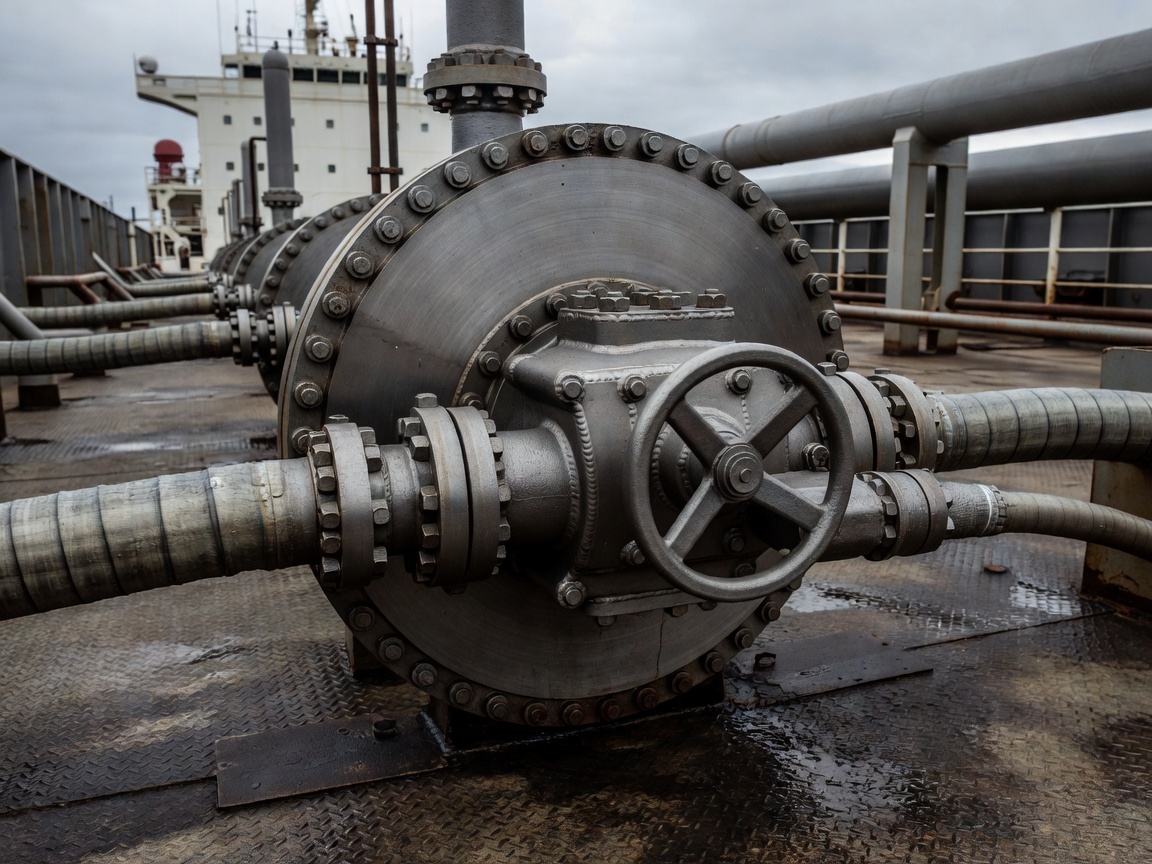
A liquid cargo reaches a tanker through a controlled connection to the terminal. Hoses or marine loading arms connect to the ship’s manifold, the grouped connection points linked to its cargo piping. Valves direct the flow toward the intended tanks. During discharge, a suitable pumping arrangement moves cargo back toward the terminal.
This simple route hides important differences. A cargo may need heating to remain pumpable, protection against contamination, specialized tank materials or carefully managed vapor conditions. Tank capacity alone does not establish suitability. The vessel’s design, certification, operating limits and condition must match the intended substance.
At a general-reader level, it helps to separate oil tankers, chemical tankers and liquefied gas carriers. Product tankers carry refined petroleum products, while crude oil tankers carry unrefined oil. Some ships have overlapping certified capabilities, so these labels describe useful families rather than perfectly separate boxes.
Oil cargoes: scale and separation
Crude oil trades often move large parcels between production regions and refineries. The resulting ships can have extensive tank capacity, but their practical limits still depend on draft, berth access, pumping arrangements and other voyage conditions. VLCC means very large crude carrier; it is a commercial vessel category, not a complete description of a particular ship.
Product tankers often carry refined cargoes such as diesel or gasoline. Keeping cargo grades separate and protecting product quality can require particular tank, coating and piping arrangements. A ship carrying several parcels must keep the right cargo on the right route through the system, including during loading, discharge and preparation for the next voyage.
Double-hull construction places protective spaces between cargo tanks and parts of the outer hull. It is an important feature of modern oil tanker design, but it does not make a vessel spill-proof. Pollution prevention also depends on equipment, maintenance, procedures and oversight. MARPOL Annex I is a central international framework for preventing pollution by oil.
Chemicals: compatibility comes first
Chemical tankers may carry cargoes whose properties differ greatly from petroleum products and from one another. Some substances require stainless steel tanks; others may be compatible with particular coatings. Cargo-specific requirements can affect tank location, containment, ventilation, electrical equipment and protective systems.
The International Bulk Chemical Code, or IBC Code, provides construction and equipment requirements for ships carrying dangerous chemicals in bulk. Its ship types reflect required levels of protection, rather than simply ranking vessels by physical size. A chemical tanker’s permitted cargoes must be checked against its actual certification and applicable conditions.
Segregation matters both for safety and for quality. Two cargoes need not react violently to be incompatible in practice: a small residue can make a high-purity product unacceptable. Cleaning and verification are therefore part of the cargo system, not an afterthought. MARPOL Annex II addresses pollution control for noxious liquid substances carried in bulk.
Gas cargoes: contain a different physical state
Liquefied natural gas, or LNG, is predominantly methane and is carried at very low temperature in purpose-designed containment. Liquefied petroleum gas, or LPG, commonly consists of propane, butane or mixtures. LPG carriers may use pressure, refrigeration or a combination, depending on their design and trade.
This is why an LNG carrier is not just an oil tanker with colder cargo. Insulation, materials, containment behavior and management of cargo vapor are fundamental design concerns. Some LNG ships have recognizable spherical tanks, while others use membrane containment that produces a different outward appearance. A silhouette can suggest an arrangement, but it cannot identify every technical detail.
The International Gas Carrier Code, usually called the IGC Code, addresses ships carrying liquefied gases in bulk. The broad lesson across all tanker families is consistent: begin with what the cargo needs to remain safely contained, then examine how the ship loads and discharges it. A busy deck of pipes is the visible part of that much larger system.